Digital Twin
Development
A digital twin lets you watch your operation as it runs, catch problems before they turn into downtime, and test a change in software before you make it on the floor. We build them for plants, fleets and supply chains.
The discipline
A live mirror of your physical world.
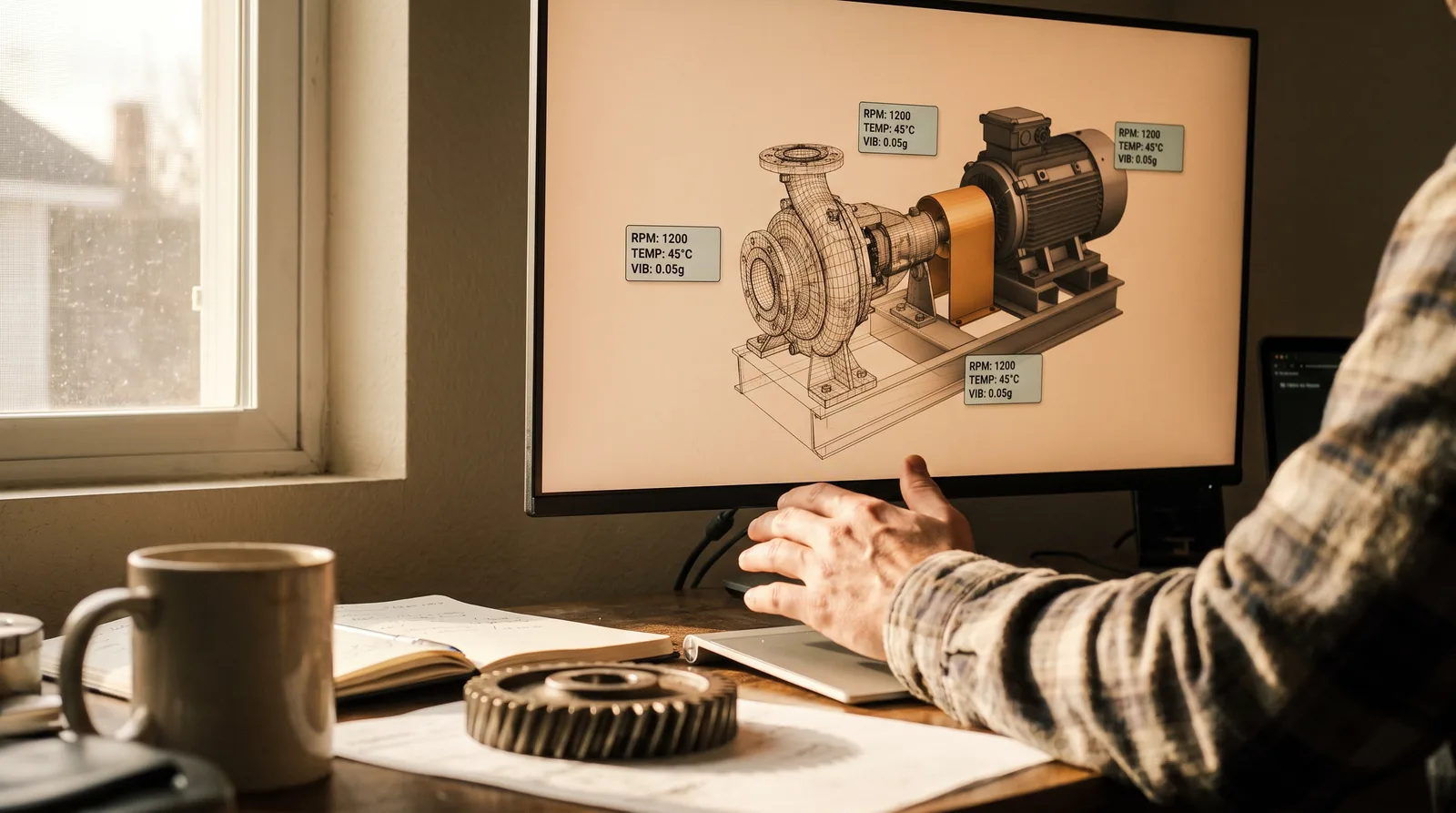
A digital twin is a virtual model of a real asset, process or system - kept current by a steady feed of sensor and operational data. It is not a one-time simulation. It updates as the real thing changes, so it stays useful as a day-to-day decision tool, not just a report you run once.
We build twins of single machines, whole factories, vehicle fleets and supply chains. We connect IoT sensors, SCADA and ERP data with AI models so every layer of the twin produces insight you can act on.
Real-time data integration
We pull data from thousands of sensors, PLCs, SCADA systems and APIs at once, with sub-second latency.
Predictive AI models
Models trained on your own operating history catch anomalies early, flag likely failures and forecast performance drop-off.
Simulation & scenario testing
Test new process settings, equipment upgrades or demand shifts in the twin first. Commit resources only once you know it works.
Applications
Where digital twins earn their keep.
Predictive maintenance
AI watches equipment health as it runs and flags trouble before it becomes a failure, so downtime stays planned instead of a surprise.
Production optimisation
Try different process settings in the twin to find what actually improves yield, throughput and energy use, without touching live production.
Supply chain visibility
A live twin of your supply network shows you the bottlenecks, lets you model a disruption before it happens, and can trigger rerouting on its own.
Energy management
Model how energy moves across your assets and shift loads where it makes sense, cutting bills and helping you hit sustainability targets.
Asset lifecycle management
See every asset in one view - from commissioning to decommissioning - with maintenance history, performance trends and replacement timing.
Product development
Test new designs in a virtual environment against real operating conditions before you build a physical prototype. Faster R&D cycles, fewer wasted builds.
Delivery approach
From sensor to something you can act on.
Asset & data mapping
We list every sensor, system and data source you have, flag data quality problems, and build a plan to fix them before any model gets built.
Twin architecture
We design the twin layer by layer: data ingestion, storage, processing, the AI models, and the dashboard and alerts on top.
Model build & calibration
We train models on your historical data and check them against real outcomes before anything goes live.
Live deployment
The twin goes live with a dashboard your operations team can run without a data science background. Alerts, reports and API integrations included.
Technology stack
Proven tools. No vendor lock-in.
We pick the platform that fits your existing infrastructure, not the other way around.
Common questions
Digital twins, answered directly.
What exactly counts as a digital twin - is it just a 3D model?
No - a 3D model is static. A digital twin is kept current by a steady feed of sensor and operational data, so it updates as the real asset changes and stays useful as a daily decision tool, not a one-time simulation you run and file away.
What data sources can you connect to build a twin?
IoT sensors, PLCs, SCADA systems, ERP data and other APIs, often thousands of data points at once with sub-second latency. We map every source you have before any model gets built.
Can you build a twin of a whole factory, or just a single machine?
Both - we've built twins of single machines, whole factories, vehicle fleets and supply chains. Scope follows whatever decision you're trying to support rather than a fixed package size.
Do we need a data science team to run this once it's live?
No - the twin goes live with a dashboard your operations team can run without a data science background, plus alerts, reports and API integrations built in.
How do you validate that the twin's predictions are actually accurate?
Models are trained on your own historical operating data and checked against real outcomes before anything goes live, not just validated on a benchmark dataset.
What's a realistic first use case if we're new to digital twins?
Predictive maintenance is usually the fastest payoff - the twin watches equipment health as it runs and flags trouble before it becomes an unplanned failure, which gives you a measurable result before expanding to production or supply-chain twins.
Start your twin
Have equipment, a fleet
or a plant to keep watch on?
Book a free discovery session. We will look at your sensor setup, help you find the twin use case with the biggest payoff, and give you a realistic timeline for getting it live.